
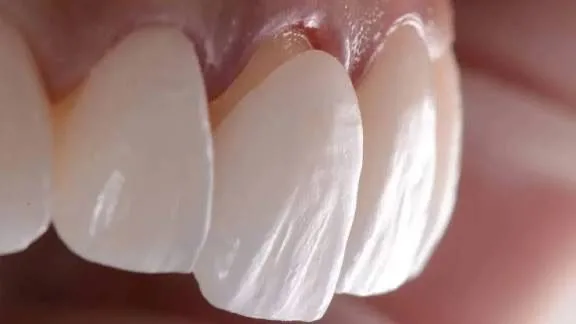
Ceramic fails for two reasons: biology, meaning decay and gum disease at the margins, and force. Force is the one nobody discusses at the quotation stage, and grinding is where most of it comes from.
Quick Answer
Bruxism is clenching or grinding of the teeth, usually during sleep, and it applies forces far beyond normal chewing. It does not prevent veneers, crowns or implants, but it changes the plan: material choice, how much the teeth are shortened, whether the bite is analysed, and whether a night guard is made. Signs include flattened or chipped edges, jaw stiffness or headache on waking, sensitive teeth, tongue or cheek indentations, and a partner who hears it. Before agreeing to any ceramic work, ask three questions: has my bite been assessed, is a night guard included, and does grinding affect the warranty.
How to Tell Whether You Grind
You often cannot feel it, because most of it happens while you are asleep. Look instead for the marks it leaves:
- Flat, polished wear facets on the tips of canines and the biting edges of front teeth.
- Small chips on the edges of front teeth, or a front edge that has become straight and short.
- Jaw stiffness, facial ache or headache on waking, easing during the morning.
- Sensitive teeth without decay, particularly at the gum line.
- Scalloped indentations along the sides of the tongue, or a ridged line on the inside of the cheeks.
- Cracked or repeatedly failing fillings, or crowns that keep debonding.
- Someone telling you they hear it at night.
Contributing factors commonly discussed include stress and anxiety, sleep-disordered breathing, some medications, alcohol, caffeine and nicotine. Sleep bruxism and daytime clenching are not the same condition and can occur separately.
Why It Matters Before Cosmetic or Implant Work
Ceramic. All dental ceramics resist compression well and tolerate shear and repeated flexing much less well. Grinding delivers exactly the second kind of load, for hours, night after night. Thin veneers on lower front teeth and on the biting edges of upper front teeth are the most exposed.
Teeth that have been prepared. A tooth reduced for a crown has less structure left to resist the same force.
Implants. This is the part that matters most. A natural tooth sits in a periodontal ligament that acts as a shock absorber and carries sensory feedback; an implant is fused directly to bone and has neither. Excess load is transmitted straight into the bone and the components, which is why grinding is associated with screw loosening, ceramic fracture and mechanical overload — one of the two main causes of late implant failure described in dental implant failure warning signs.
Full-arch cases. The more units in one span, the more force accumulates and the more expensive a fracture becomes.
What a Plan Should Do Differently
- Assess the bite before preparing anything, including how the front teeth guide the jaw as it moves sideways and forwards, not only how the teeth meet when closed.
- Record the existing wear in writing and in photographs, so that later wear can be distinguished from earlier wear.
- Choose material accordingly. Monolithic, full-contour ceramics generally resist fracture better than the same restoration layered with a softer surface porcelain, which is the usual first thing to chip. The comparison is discussed in zirconia versus E.max.
- Avoid unnecessary lengthening. Longer front teeth look striking in a photograph and are more exposed in a grinder's mouth.
- Include a night guard, made after the final restorations are fitted, and specify who makes it, when and at whose cost.
- Consider addressing the cause, not only protecting against the effect: stress management, and a medical referral if snoring or interrupted breathing during sleep is reported.
The Three Questions to Ask Before Any Ceramic Treatment
- Has my bite been assessed, and what did it show? If nobody looked at how your teeth move against each other, force has not been planned for.
- Is a night guard included in this price, and when is it made? A guard made from pre-treatment impressions does not fit post-treatment teeth. See what a dental package actually includes.
- Does grinding affect the warranty? Many warranties exclude damage attributed to bruxism, and many also void if a prescribed night guard is not worn. Ask for this in writing before treatment, not after a fracture. See dental treatment guarantee questions.
If you grind and are considering veneers, crowns or implants, send photographs of your teeth and any previous night guard on WhatsApp or book a consultation. It is a short conversation that changes the plan, and it is much cheaper before the ceramic is made.
After Treatment
- Wear the guard. It is the cheapest insurance in dentistry, and the restorations it protects cost many times more.
- Have the guard checked at reviews; they wear out and stop fitting.
- Report any new clicking, muscle pain, or a bite that feels uneven, promptly. Early adjustment is simple; a fractured unit is not.
- Avoid using new front restorations as tools — opening packaging, biting thread, chewing ice.
- Keep the margins clean. Force and plaque together do far more damage than either alone. See preventing gum disease.
This is one of the findings that can change a plan after examination, which is why the remote stage is only preliminary: preliminary information or final plan?.
References
- World Health Organization: Oral health fact sheet
- NHS: Teeth grinding (bruxism)
- NIH National Institute of Dental and Craniofacial Research
- General Dental Council (UK): guidance for patients
- FDI World Dental Federation
This article is general educational information. It is not a diagnosis and does not replace a clinical examination. Whether you have bruxism, and what it means for a proposed treatment, can only be determined by examining your teeth, muscles and bite. If snoring or interrupted breathing during sleep is part of the picture, ask your doctor as well as your dentist. To discuss a plan, book a consultation or message us on WhatsApp.