
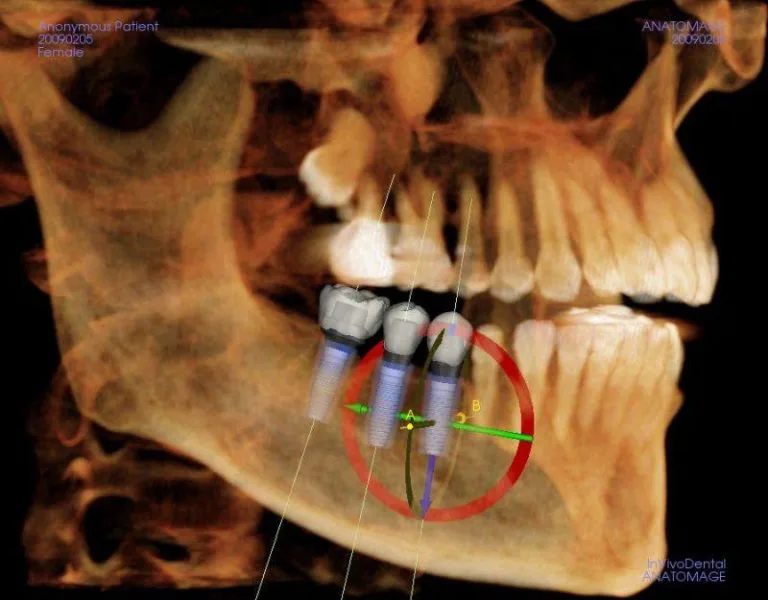
Dental implants have a high success rate, but no surgical treatment succeeds every time. The useful question is not whether failure happens — it is whether you can recognise it early, while the problem is still small and while the bone around the implant can still be saved.
Quick Answer
An implant is failing when it moves, when pain arrives or returns after the first fortnight, when the gum around it stays swollen, bleeds or discharges pus, when the gum recedes and metal becomes visible, or when your bite feels different. Early failure happens in the first weeks and usually means the implant did not integrate with the bone. Late failure happens years afterwards and usually means infection around the implant or excess load on it. Both need imaging, not reassurance. If the clinic that placed the implant is abroad, see a local dentist for an urgent assessment first, get a written report and a radiograph, and send both to the original clinic on the same day.
Normal Healing Versus a Problem
In the first three to five days after placement it is normal to have some swelling, some bruising, mild discomfort controlled by ordinary pain relief, and a little pink in your saliva. That should be improving day by day.
What is not normal at any point:
- Pain that increases after day three or four rather than settling.
- Pain that starts again weeks or months after the site was comfortable.
- Bleeding that is fresh and persistent rather than diminishing.
- Swelling that spreads across the face, or fever.
- Any sensation of movement in the implant itself.
The rule of thumb is direction, not intensity. Healing gets better each day. A problem gets worse, or gets better and then returns.
The Six Signs That Need Assessment
1. Movement. A healed implant should feel like part of your jaw. Movement of the implant body is the one sign that is never acceptable. A loose crown or screw is a different and far more repairable problem, but you cannot tell them apart yourself — that distinction needs a dentist.
2. Pain that returns. Late pain around an implant is not something to wait out. It usually means infection or overload.
3. Gum that stays inflamed. Redness, swelling, tenderness or bleeding when you brush around an implant is peri-implant disease until proven otherwise.
4. Pus or a bad taste. Discharge from around an implant is infection and needs urgent attention.
5. Recession or visible metal. Gum retreating from the implant usually means the bone underneath has retreated first.
6. A bite that changed. If one side suddenly touches first, or chewing feels different, the load on the implant has changed — and load is one of the two things that destroys implants.
Early Failure and Late Failure Are Different Problems
Early failure occurs before or shortly after the implant is loaded, and means osseointegration — the bone bonding to the implant surface — did not happen. Contributing factors include infection at placement, insufficient or poor-quality bone, overheating of bone during drilling, movement of the implant during healing, heavy smoking, and uncontrolled systemic disease. Whether you are a candidate in the first place is covered in am I a candidate for dental implants.
Late failure occurs after successful integration and has two dominant causes:
- Peri-implantitis: inflammation of the tissue around the implant with progressive bone loss, driven by plaque and made worse by smoking and by a history of gum disease. Its earlier, reversible stage is peri-implant mucositis — gum inflammation without bone loss. That stage is the one worth catching. See gum disease treatment.
- Mechanical overload: too much force, from clenching and grinding, from too few implants supporting too long a bridge, or from a bite that was never adjusted properly. If you grind your teeth, read teeth grinding, veneers, crowns and implants.
What to Do When the Clinic Is in Another Country
Do these in order. Do not wait for a reply from abroad before step one.
- Get seen locally, urgently, if there is swelling, fever, pus or pain. Infection is time-sensitive and is treated where you are, not where you were treated.
- Ask for a radiograph and a written report. A periapical or panoramic radiograph showing bone levels around the implant is the single most useful document you can obtain. Ask for the image file, not a photograph of a screen.
- Ask the local dentist to state, in writing, whether the implant is mobile, whether there is bone loss, and whether there is infection. Those three answers determine everything that follows.
- Send the report, the images and dated photographs to the original clinic the same day, in writing, and keep the thread. What to do if nobody replies is covered in when your clinic abroad stops replying.
- Ask what your warranty actually covers — replacement of the implant, the crown, the lab work, or your travel. These are separate questions, and most patients only discover the difference here. See the guarantee questions to ask.
- Do not accept a full revision quote from anyone who has not examined you and looked at your imaging.
If you have an implant you are worried about, send your radiograph and a note about when the symptoms started on WhatsApp or book a consultation. Our team reads records in Arabic, English and Turkish, and will tell you plainly whether what you describe needs urgent local care before anything else.
Can a Failed Implant Be Replaced?
Usually, yes — but not on the same day and not always in the same position. The failed implant is removed, the site is cleaned and allowed to heal, and bone volume is assessed. If bone was lost, grafting may be needed before a new implant is placed, which adds months rather than weeks. See bone graft and sinus lift.
Two honest points that clinics selling speed rarely make. First, a replacement implant placed into a site that has already failed once has a lower success rate than the first attempt, which is an argument for finding out why it failed before repeating it. Second, if the cause was grinding, gum disease or smoking and that cause is not addressed, the replacement is exposed to the same force that removed the first one.
Lowering the Risk Before It Happens
- Treat gum disease before implant surgery, not after.
- Give an accurate medical history, including every medication. Bone-modifying drugs such as bisphosphonates and denosumab, and uncontrolled diabetes, change surgical planning materially.
- Stop smoking around the surgery if you can; it is the most consistently reported modifiable risk factor for implant failure.
- Insist on a CBCT scan rather than a two-dimensional image for planning. See what a CBCT scan is for.
- Keep the maintenance appointments. Implants do not decay, but the tissue around them behaves like tissue around teeth.
- Ask, before you book, who provides the follow-up radiograph at one year and who pays for it. Read what is actually included in a dental package.
For staged treatment, the interval between visits should carry a written monitoring plan, described in two trips, one treatment.
Acting on any of this is far easier if you kept the record: implant brand and batch information, and what happens after dental treatment, once you are back home for how to describe a change so it can be assessed.
References
- World Health Organization: Oral health fact sheet
- NHS: Dental implants
- NIH National Institute of Dental and Craniofacial Research
- European Federation of Periodontology: peri-implant diseases
- FDI World Dental Federation
This article is general educational information. It is not a diagnosis and does not replace a clinical examination. Any implant that is painful, mobile, bleeding or discharging needs to be seen in person and imaged. If you have facial swelling, fever, or difficulty swallowing or breathing, seek emergency medical care immediately. To have records reviewed, book a consultation or message us on WhatsApp.