
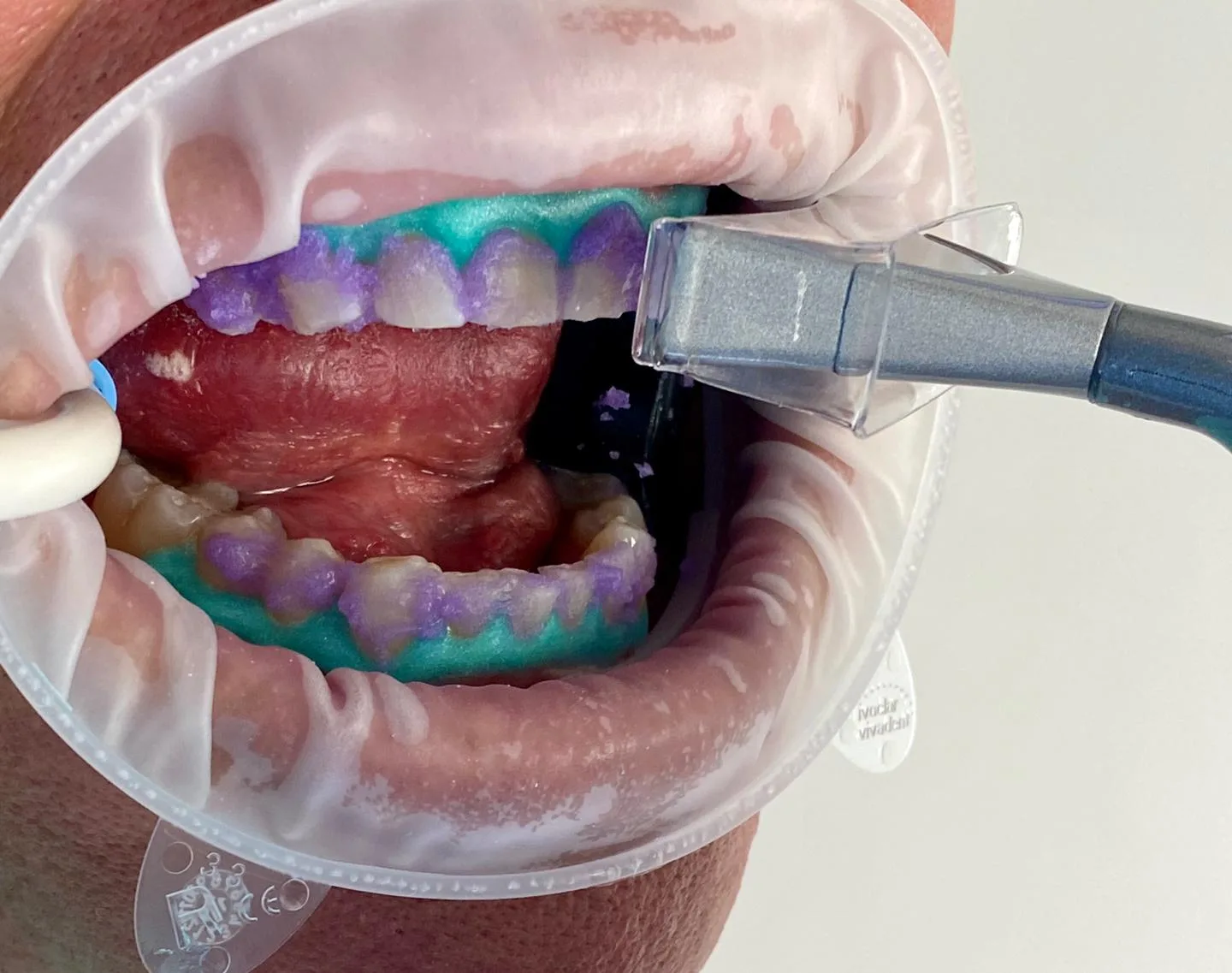
"Hollywood smile" is a marketing phrase, not a clinical procedure. That is the first thing worth knowing, because the same phrase is used to sell two very different treatments with very different risk profiles: thin veneers bonded to lightly prepared enamel, and full crowns fitted over teeth that have been reduced on all sides.
Quick Answer
The procedure is safe when it is clinically indicated, planned on healthy gums and healthy teeth, and executed with the least tooth reduction that achieves the result. The risk is not in Turkey, and it is not in ceramic. It is in three things: irreversible reduction of healthy teeth, treating a cosmetic complaint while gum disease, decay or a bite problem is left untreated, and doing a full arch in a few days without a trial of the new bite. Real complications include sensitivity, nerve inflammation that later needs root canal treatment, gum irritation and recession, debonding, ceramic fracture and jaw discomfort. Ask which treatment is proposed — veneers or crowns — and how much of each tooth is removed, before anything else.
Where the Risk Actually Sits
1. Irreversible preparation of healthy teeth. Once enamel is removed it does not grow back, and the tooth is committed to being restored for the rest of your life. A veneer or crown is not a permanent object; it is a maintenance cycle. This is the single most important point in the whole subject and it is covered in detail in what is actually removed when veneers are prepared.
2. Cosmetic work over an untreated problem. Ceramic placed on inflamed gums, active decay, an untreated root infection or an unstable bite does not fix any of them; it hides them and adds load. Gums should be healthy before anything is bonded. See gum disease treatment.
3. Speed. A full arch designed, prepared and cemented inside a few days leaves no time to test the new bite, the new tooth length or the new speech patterns before everything becomes permanent. A mock-up or temporary phase is not a luxury; it is the test drive.
4. Doing more teeth than the complaint requires. If four teeth bother you, the number under discussion should start at four. Twenty-unit plans that appear in response to a complaint about two teeth deserve a second opinion — see getting a second opinion on a treatment plan.
The Complications That Are Real
- Sensitivity to hot and cold, common in the first weeks after preparation, usually settling. Sensitivity that persists or worsens needs assessment.
- Pulp inflammation and pulp death. Reduction of a tooth is a thermal and mechanical insult to the nerve inside it. A proportion of prepared teeth eventually need root canal treatment, and the risk rises with the amount removed — one of the reasons crowns carry more of it than minimal-preparation veneers.
- Gum inflammation and recession, particularly where the restoration margin is poorly fitted or sits too far under the gum. A dark line at the gum years later is usually recession, not staining.
- Debonding and fracture. Ceramic is strong in compression and vulnerable to shear and to grinding. See teeth grinding and ceramic work.
- Bite and jaw symptoms. Changing the height or the guidance of the front teeth changes how the whole system closes. Muscle tenderness or clicking that starts after cosmetic work is a bite problem until proven otherwise.
- A result you do not like. Shade, shape and length are subjective, and they are decided before the teeth are prepared. Once prepared, "let us go back to how it was" is no longer available.
Who Should Wait, and Who Should Not Have It
Postpone until treated: active decay, untreated gum disease, an unresolved root infection, or acute jaw joint symptoms. Address first, then re-plan: heavy grinding, poor plaque control, heavy smoking.
Discuss carefully and consider alternatives: teenagers and very young adults whose gum position is still maturing; anyone whose main concern is alignment rather than colour or shape; anyone who has been told their teeth are healthy and simply wants them whiter.
Pregnancy is not a contraindication to dental care, but elective cosmetic treatment is normally deferred, and any radiograph or medication decision should involve your doctor.
The Less Invasive Route to the Same Result
Good cosmetic dentistry works up the ladder, not down it. In many cases the desired outcome is reachable with one or two rungs rather than a full arch of crowns:
- Cleaning and gum treatment. Healthy pink gums change a smile more than most patients expect.
- Whitening. If the complaint is colour, this is the answer, and it removes nothing. See teeth whitening.
- Orthodontics, including clear aligners. If the complaint is crooked teeth, moving them keeps the enamel. See clear aligners.
- Composite bonding or edge recontouring. Reversible or near-reversible, useful for chips and small gaps.
- Minimal-preparation veneers, only where shape or colour cannot be corrected by the steps above.
- Crowns, where the tooth is already heavily restored, root treated or broken down — that is, where the tooth needed a crown anyway.
A plan that jumps straight to step 6 for healthy teeth should be explained, in writing, tooth by tooth.
If you have been given a plan and want to know which rung it sits on, send it with your photographs on WhatsApp or book a consultation. We will tell you what the plan removes, what it does not address, and whether a smaller version reaches the same result.
What a Safe Plan Looks Like
- An examination and radiographs, with a diagnosis stated per tooth — not a price list produced from selfies.
- Gum health established first.
- A digital or wax mock-up, and a temporary phase you can live with, speak with and eat with.
- The least reduction that works, with the amount stated.
- The material named, and why it was chosen. See zirconia versus E.max.
- A bite assessment, and a night guard if you grind.
- Written consent that says what is irreversible.
- A written maintenance and warranty plan, including who checks the margins in a year. See dental treatment guarantees.
References
- World Health Organization: Oral health fact sheet
- NHS: Veneers
- General Dental Council (UK): guidance for patients
- NIH National Institute of Dental and Craniofacial Research
- FDI World Dental Federation
This article is general educational information. It is not a diagnosis and does not replace a clinical examination. Whether veneers, crowns or a less invasive option suit your teeth can only be decided after an examination and radiographs. To have a plan reviewed, book a consultation or message us on WhatsApp.