
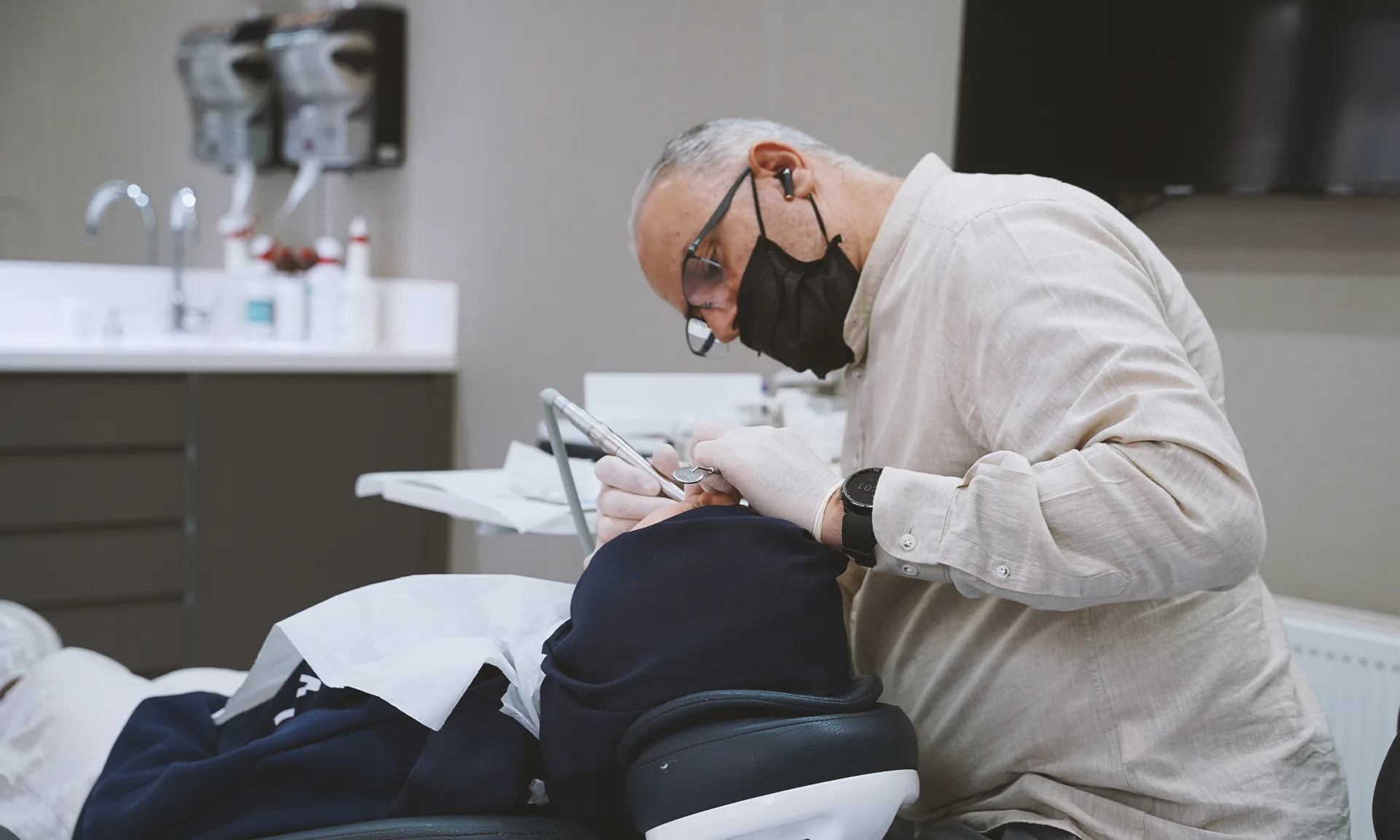
Most articles about dental treatment abroad describe what a clinic should do. This one describes what this clinic does, stage by stage, so you can see where you are in the process at any point and what you should be holding in your hands by then.
Nothing here is a diagnosis, and nothing here replaces an examination. It is a map of the process around the clinical work.
Quick Answer
An international case at Adil Dent Clinics runs in nine stages. You make contact, usually on WhatsApp. The clinic answers treatment questions and gives preliminary information about the likely treatment, how long it may take, what it is expected to cost and the steps involved. Once a preliminary plan is agreed, travel and reservation arrangements are coordinated with you: you book your own flight, and the clinic organises the hotel and the transfers between airport, hotel and clinic. In Istanbul you are examined in person, any necessary imaging is taken, and the final treatment plan is confirmed only after that clinical evaluation. You receive a treatment plan stating the planned procedures and the agreed cost before treatment begins, and an official invoice after payment. Afterwards you receive post-treatment instructions, and follow-up communication with the clinic remains available once you are home.
Key Takeaways
- The remote stage produces preliminary information and a preliminary plan. It is not a diagnosis and not a final plan.
- The split of travel responsibility is fixed: your flight is yours to book; hotel and transfers are organised by the clinic.
- According to the clinic's current policy, no deposit or advance payment is required before you travel.
- The final plan is confirmed after an in-person examination, with imaging where the case needs it.
- You should leave with a treatment plan, an invoice for what you paid, and instructions for afterwards.
The Journey in Nine Stages
| Stage | What happens | Who acts | What you should have afterwards |
|---|---|---|---|
| 1. First contact | You describe your situation and ask questions, usually on WhatsApp | You | A reply that answers questions and says what cannot be answered remotely |
| 2. Preliminary information | Likely treatment, expected duration, expected cost and the steps involved are discussed | Clinic | Written preliminary information, clearly labelled as preliminary |
| 3. Records request | Clear photographs of your teeth and a frontal smile photograph; depending on the case, a panoramic X-ray or a CBCT scan | You | A list of exactly what to send |
| 4. Preliminary plan agreed | You and the clinic agree a provisional direction and approximate dates | Both | Dates, the provisional plan, and what will be reviewed on arrival |
| 5. Travel arrangements | You book your flight; the clinic organises the hotel and the transfers | Both | Flight details sent to the clinic, confirmation of the hotel and pickup arrangement |
| 6. Arrival and examination | Airport pickup, hotel, then an in-person clinical examination with imaging where needed | Clinic | Findings explained to you |
| 7. Confirmed plan and consent | The final treatment plan is confirmed after the examination; consent is taken for specific treatment | Both | The treatment plan with planned procedures and agreed cost, and the consent form you signed |
| 8. Treatment and payment | Treatment is carried out; an official invoice documents the amount paid | Both | The invoice, and a clinic-stamped treatment document where one is issued |
| 9. Going home and follow-up | Transfer back to the airport; post-treatment instructions; continued contact when needed | Both | Instructions, and a way to reach the clinic from home |
Stage 1 and 2: The Enquiry and What It Can Produce
Most international patients open with a message rather than a form, and WhatsApp is the usual channel. At that point the clinic can answer treatment-related questions, give preliminary information about the treatment that may be appropriate, discuss the expected duration, discuss cost, and explain the steps that would follow.
What it cannot produce is a diagnosis. No clinic can diagnose from a photograph, and a plan that arrives before anyone has examined you is a working hypothesis with a price attached. That distinction is the single most useful thing to understand before you travel, and it is set out in full in preliminary information versus a final treatment plan.
Stage 3: What You Send
Initially the clinic may ask for clear photographs of your teeth and a frontal photograph showing your teeth and smile. Depending on your individual case and the treatment being considered, a 2D panoramic dental X-ray or a CBCT (3D tomography) scan may also be requested. Not every patient needs the same imaging, and imaging you already have is worth sending before paying for anything new.
How to take usable photographs is covered in what photographs to send before a dental consultation, and whether you need an X-ray before you travel in do I need an X-ray before travelling.
Stage 4 and 5: Agreeing to Travel, and Who Arranges What
Once a preliminary treatment plan is agreed, travel and reservation arrangements are coordinated with you. The division is worth stating plainly because it is where most confusion starts:
- You book your flight. Choosing dates, airline and airport is yours, which also means the clinic cannot change them for you later.
- The clinic organises the hotel.
- The clinic organises transfers: airport pickup on arrival, airport to hotel, hotel to clinic for appointments, clinic back to hotel afterwards, and hotel to airport when treatment is finished.
What is organised and what is included are two different questions, and the second one is yours to ask in writing. Who books the flight, hotel and transfers covers the split in detail, and the transfer chain covers how the journeys connect.
Stage 6 and 7: The Examination, and the Plan Becoming Final
In Istanbul, treatment does not begin with treatment. You are examined in person first. Necessary X-rays or scans may be taken at the clinic. The final treatment plan is confirmed after that clinical evaluation — which is to say the plan you discussed remotely may be confirmed, refined or changed, and any change should be explained to you and shown on your own imaging.
Before treatment begins you receive a treatment plan that sets out the treatments and procedures planned and the agreed cost of treatment. Consent is taken for specific treatment; the clinic currently provides informed consent forms in Turkish, English and Arabic. What a good consultation sequence looks like in general is covered in your first dental appointment in Istanbul.
Stage 8: Payment and Documents
According to the clinic's current policy, no deposit or advance payment is required before you travel. This describes the policy as it currently stands rather than a permanent commitment, so confirm it in your own conversation.
After payment you receive an official invoice documenting the amount paid. Where appropriate the clinic may also provide an official clinic-stamped document showing the treatments performed and the amounts paid — useful for your dentist at home, and sometimes for an insurer or employer. The treatment plan and invoice sequence explains which document arrives when, and documents to receive after treatment lists what to leave with.
For dental implants specifically, the warranty position depends on the implant manufacturer and is subject to the manufacturer's warranty terms and conditions. That is a different thing from clinic treatment documentation, and the two are separated in how dental implant warranties work.
Stage 9: Going Home, and After
You are transferred from the hotel to the airport once treatment is complete. You receive post-treatment instructions. You may remain in contact with the clinic after returning home, and follow-up communication is available when questions or follow-up needs arise.
Remote follow-up has real limits — it can triage a question, not examine a mouth — and planning for that before you fly is the subject of after dental treatment, when you are back home and the more general follow-up care after dental treatment abroad.
What This Journey Deliberately Does Not Include
Being explicit about the boundaries is part of describing a process honestly.
- No final diagnosis or final treatment plan before an in-person examination.
- No guarantee that a remote estimate will match the confirmed plan.
- No statement that any particular imaging is required for every patient.
- No promise about treatment outcomes, healing times or implant survival; those depend on the individual case and on clinical assessment.
Where to Start
If you are at stage one, the useful first message is short: what is bothering you, what you would like fixed, roughly when you could travel, and any photographs you already have. Send it on WhatsApp or request an appointment. For the regulatory background in Türkiye, see dental treatment in Turkey, and for the practical side of being in the city, dental treatment in Istanbul and the international patients page.