
Search for dental treatment in Turkey and most of the first page is not made of clinics. It is made of referral platforms, agencies and lead marketplaces, many of which are designed to look exactly like a clinic. This is not automatically a problem — but knowing which one you are talking to changes what you should ask, what you are agreeing to, and who owes you anything afterwards.
Quick Answer
Three different businesses compete for the same search. A clinic examines you, plans your treatment and treats you; it holds your medical record and its dentists carry the licences. An agency or coordinator organises your trip and sells you a package, then subcontracts the dentistry to a clinic you may not choose. A referral platform sells your enquiry as a lead to several clinics and is paid for the introduction. To tell them apart, look for a physical clinic address, named dentists with licence numbers, and who issues the invoice. Ask one question: "Who examines me, and whose name is on my treatment plan?" If the answer is vague, you are not speaking to the clinic.
The Three Models
The clinic. Has an address you can stand in front of, dentists you can name, a licence, a medical record system and a legal obligation to you as a patient. When something goes wrong, there is a specific regulated entity to go back to.
The agency, coordinator or "medical tourism company". Sells the journey: flights, transfers, hotel, translator, and the dentistry bundled into one price. Some are genuinely useful, particularly for a patient travelling alone for the first time. The structural issue is that the agency's product is the package, and the clinic is a supplier inside it. You typically pay the agency, not the dentist, and the agency chooses the clinic — which means the clinic can be changed without much explanation, and the commission sits between you and your treatment plan.
The referral platform. Publishes comparison pages and "best clinic" listings, collects your enquiry and passes it to clinics that pay to receive it. Reputable platforms disclose this. If several clinics you never contacted start messaging you after one form, that is the model in action.
Five Ways to Tell in Five Minutes
- Read the footer and the legal pages. Referral platforms usually disclose their status in small print — some state outright that they do not provide dental services. Companies operating as agencies are often registered as travel or tourism businesses rather than health facilities.
- Look for one physical clinic address, on a map, with photographs of that actual building. A page listing "our clinics" in several cities is a network or a broker, not a clinic.
- Look for named dentists with verifiable registration. A clinic names the person who will treat you. An agency names coordinators. How to check credentials is covered in how to verify a dental clinic's credentials.
- Ask who issues the invoice and in whose name. This is the most revealing single question, and the answer is contractually meaningful.
- Ask who examines you and who signs the treatment plan. A dentist plans dentistry. If a non-clinical coordinator sends you a full plan and price before any dentist has looked at your imaging, the plan is a sales document. See what a dental package actually includes.
Why It Matters After Treatment
While everything goes well, the difference is invisible. It becomes very visible in three situations.
Aftercare and complications. An agency's commercial relationship with you generally ends when the trip ends. A clinic's clinical relationship does not. If a crown debonds or an implant is painful six months later, you need the entity that holds your record and can instruct a dentist — see follow-up care after treatment abroad.
Warranty. A warranty is only worth what the entity behind it can be held to. Ask who is giving it: the clinic, or an intermediary who subcontracted the work. The questions to ask are in dental treatment guarantees.
Your records. You are entitled to your own imaging and treatment records. Intermediaries frequently do not hold them, so a request routed through an agency after the trip can simply stall. Ask for your CBCT files, radiographs and itemised plan before you leave, as described in dental records and X-rays.
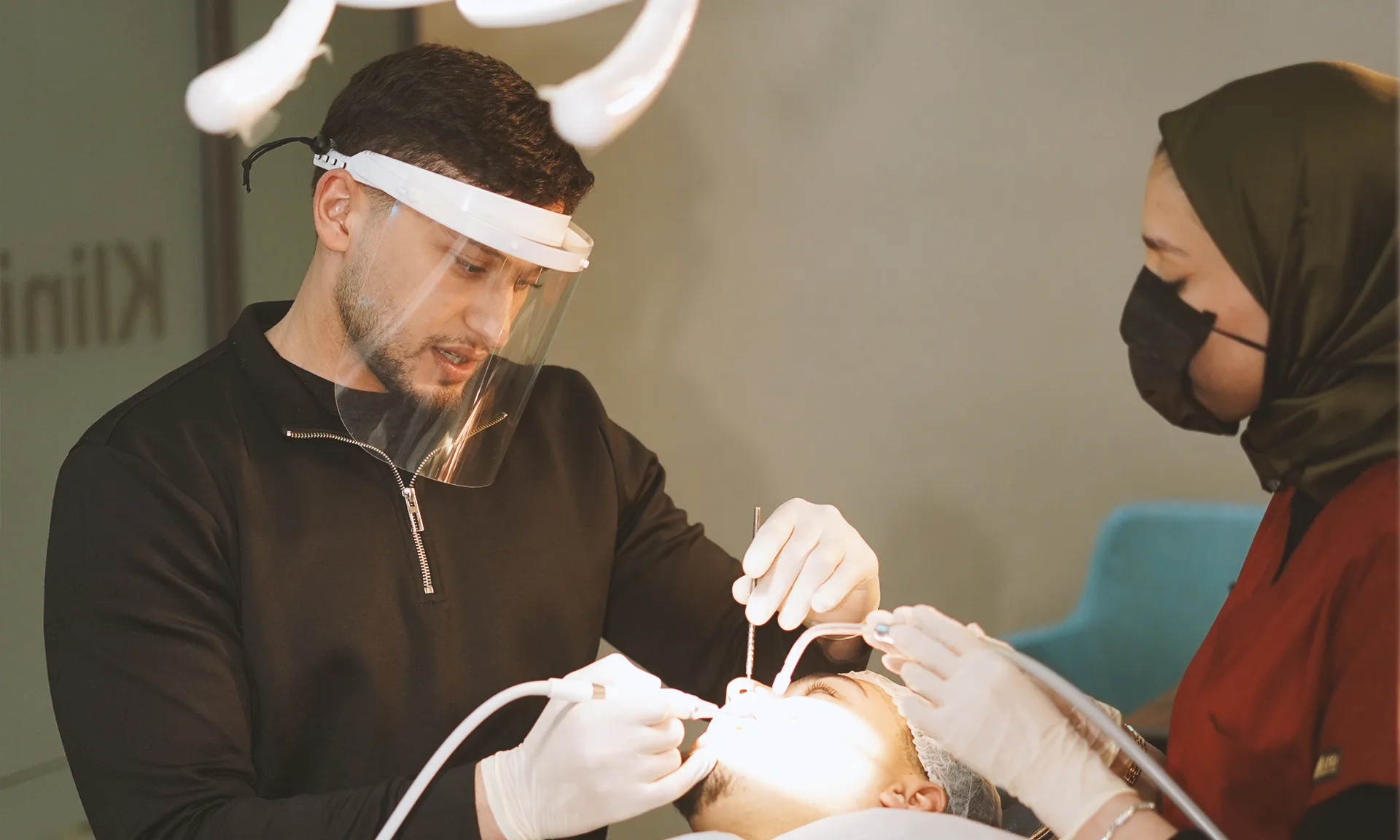
Adil Dent is a clinic. You are examined by our dentists, your plan carries a dentist's name, we hold your records, and you can write to the same team a year later. If you want to check that before committing anything, send your questions on WhatsApp or book a consultation in Arabic, English or Turkish.
When an Agency Is Genuinely the Right Choice
Being honest about the alternative: an agency earns its fee when you are travelling alone, do not speak the language, need visa support, want the trip organised end to end, or are combining treatment with a long stay. If you use one, keep three things under your own control:
- You choose the clinic, by name, in writing, and it does not change without your agreement.
- You have direct contact with the clinic, not only with the coordinator.
- The clinical plan comes from the dentist, after an examination and imaging, not from the package brochure.
Questions Worth Asking Before You Pay
- Are you a clinic, an agency or a referral service?
- Which clinic will treat me, and can I contact it directly?
- Which dentist will do the work, and what is their registration?
- Who issues my invoice and receives my payment?
- Who holds my medical records, and how do I obtain them later?
- Who provides the warranty, in writing, and who honours it?
- If a complication occurs after I go home, who do I contact and who pays for what? See what drives the cost of treatment.
- If I want to change my mind about a treatment on the plan, who has to agree?
A clinic can answer all eight in a paragraph. An intermediary usually cannot answer four of them.
Whoever you book with, ask who issues the invoice and who holds the money, as set out in paying a dental clinic abroad, and ask for the plan itself in writing: what it should contain.
The authorisation route differs between the two, which is covered in what is a health tourism authorisation for a dental clinic in Türkiye?.
References
- World Health Organization: Oral health fact sheet
- Republic of Türkiye Ministry of Health, international health tourism
- NHS: Going abroad for dental treatment
- General Dental Council (UK): guidance for patients
- FDI World Dental Federation
This article is general educational information about how treatment abroad is sold and organised. It is not a diagnosis, does not replace a clinical examination, and does not constitute legal advice. To speak directly with the clinic, book a consultation or message us on WhatsApp.