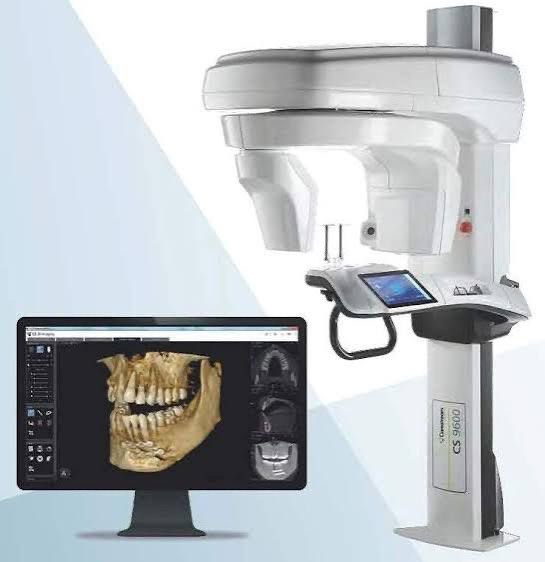
CBCT stands for Cone Beam Computed Tomography. It is a type of 3-D X-ray that gives your dentist a very detailed, three-dimensional picture of your teeth, jaws, and surrounding structures.
What Is a CBCT Scan?
Inside each tooth is a soft tissue called the pulp, which contains nerves, blood vessels, and connective tissue. When harmful bacteria reach the pulp, it can cause pain, sensitivity, and swelling. Unlike regular dental X-rays, which show flat (2-D) images, a CBCT scan shows your mouth in all directions — front, back, and sides — much like a 3-D photograph.
Why Would I Need a CBCT Scan?
Your dentist may recommend a CBCT scan to:
- • Plan dental implants
- • Check the position of wisdom teeth
- • Find hidden infections or cysts
- • Examine jaw problems or pain
- • Plan root canal treatment
- • Look at sinuses or jaw joints (TMJ)
These conditions can be hard to see clearly with regular X-rays. A CBCT scan allows your dentist to see exactly what’s happening beneath the surface, leading to more accurate and safer treatment.
Is a CBCT Scan Safe?
Yes. A CBCT scan uses low-dose radiation, and it is considered safe when used appropriately. The amount of radiation is higher than a single small dental X-ray, but still much lower than a medical CT scan done in a hospital.
Your dentist only recommends a CBCT scan when the benefits clearly outweigh any small risk.
If you are pregnant or think you might be pregnant, always inform your dentist before any X-ray.
What Happens During the Scan?
The scan is:
- • Quick (usually under 30 seconds)
- • Painless
- • Non-invasive
You will either sit or stand while the machine slowly rotates around your head. You just need to stay still. There is no discomfort, no needles, and no loud noises.
You can return to your normal activities immediately afterward.
How Does a CBCT Scan Help My Treatment?
Because the scan shows your teeth and jaws in 3-D, your dentist can:
- • Avoid important nerves and sinuses
- • Place implants more safely
- • Detect problems earlier
- • Plan surgeries more precisely
- • Reduce unexpected complications
This often means safer treatment, better results, and faster healing.
Will I Feel Anything After the Scan?
No. A CBCT scan does not cause pain, swelling, or side effects. It is simply an advanced imaging test, like taking a photograph of the inside of your mouth.
It's ideal for patients looking for fast, noticeable results with minimal discomfort. Experience the confidence that comes with a brighter, whiter smile at Adil Dent.
In Summary
A CBCT scan is:
- • A special 3-D dental X-ray
- • Used for better diagnosis and safer treatment
- • Quick, painless, and safe
- • Helpful for implants, wisdom teeth, infections, jaw issues, and more
If your dentist recommends a CBCT scan, it is to ensure your care is as accurate, safe, and successful as possible.